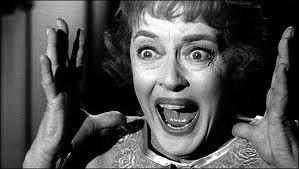
With the passing of Elizabeth Taylor last week, we can’t help but have the feeling that we’re losing our ties to the roots of American cinema. Sadly, as we lose more of these Golden Age screen idols, the contenders to fill their shoes are, at the very least, lacking.
Though living a far less high-profile life that did Miss Taylor, we’re still graced with the presence of two of the cinema’s greatest stars: sisters Joan Fontaine and Olivia de Havilland.
Olivia de Havilland was born in Tokyo, Japan to English actress Lillian Fontaine (Lillian Augusta Ruse) and Walter Augustus de Havilland, a patent attorney. From an early age, de Havilland had theatrical tendencies. Lillian encouraged her daughter’s passion for drama, and it is alleged that when her second daughter, Joan, also showed an interest in theater, Lillian placed Olivia’s wants above Joan’s.
After moving to the United States, a young Olivia de Havilland made her stage debut at the Hollywood Bowl as Hermia in A Midsummer Night’s Dream. Her performance was so well-received that in 1935, when Warner Brothers was making their film adaptation of the Shakespearean masterpiece, de Havilland was the only member of the Californian stage company who was retained in her part—the other roles being recast with contract players. With a successful screen career in the offing, de Havilland quickly found herself in a series of small, but impressive roles. She became a true leading lady alongside Errol Flynn in eight popular films. Many speculated that Flynn and de Havilland were embroiled in a private romance. However, de Havilland has stated that while the two did share a mutual attraction, they remained just friends.
1939 was a major turning-point in American cinema. The year also offered a unique opportunity to de Havilland. While David O. Selznick was searching for his “Scarlett,” he already had his “Melanie” for Gone with the Wind. Olivia de Havilland was one of the first to be cast for the world’s most famous film and her portrayal of gentle Melanie Wilkes provided her with a permanent place in the world’s collective memory.
After Gone with the Wind, de Havilland returned to her usual contract work at Warner Brothers, but became more careful about which roles she accepted. She was increasingly cast as “the good girl” and wanted to try her hand at other types of characters. Each time de Havilland rejected a part that Warner had assigned her, she was placed on suspension. When he contract was up, she discovered that she was going to be forced to stay at Warner Brothers for several more months because of her amounted suspension time. This was a common practice in the classic studio system. De Havilland was furious and took Warner Brothers to court. She finished the battle started by her good friend and frequent co-star Bette Davis a few years earlier. With her triumph over Warner Brothers, de Havilland changed the way in which actors are employed for the better. The guidelines about contract length still hold the informal name, “De Havilland’s Law.”
Warner Brothers, defeated and embarrassed, vowed never to employee de Havilland again and she quickly and happily went to Paramount where she found a renewed artistic freedom and chances to play the types of roles she had dreamed of. Her performances in films such as The Heiressand The Snake Pit proved she was more than just a pretty face and a sweet disposition.
In 1949, she won her second Academy Award (her first came in 1946 for To Each His Own) for Best Actress for her work in The Heiress. De Havilland continued to be busy will into the 1960’s. After making Hush…Hush, Sweet Charlotte with Bette Davis, her career began to slow down and she led an increasingly more private life in her home in Paris.
For her unparalleled body of work and her contributions to the arts of the last eight decades, Olivia de Havilland is our Person of the Week.
Enjoy Miss de Havilland in these scenes from The Heiress (1949) and The Snake Pit (1948).
Clift and de Havilland, courtesy Paramount Pictures.
Timid and unsure of herself, Catherine Sloper lives in New York in the mid Nineteenth Century. She shares a magnificent Washington Square townhouse with her domineering father, Dr. Austin Sloper, who is continually disappointed by his fragile daughter. Often comparing Catherine to her late mother—a great beauty and his true love—he cannot reconcile the fact that such a superior creature bore such a dull child. Catherine’s one great skill, as Dr. Sloper puts it, is that she “embroiders neatly.” Upon the visit of her Aunt Lavinia, the family goes to celebrate the engagement of Catherine’s cousin. At the party, Catherine is shy though she is encouraged by Lavinia to be more outgoing. There, Catherine chances to meet the brother of the groom-to-be, one Morris Townsend, a stunningly handsome and charming man who, unexpectedly, lavishes Catherine with his attentions. Catherine soon falls in love with Morris and hopes her father will consent to their marriage. Dr. Sloper, however, believes Morris to be a fortune-hunter. Why would such a worldly and attractive young man love his daughter if not for her ample inheritance? And, so, Catherine goes to great lengths to find a way to wed Morris despite her father’s wishes. However, does Dr. Sloper prove to be correct in his assumptions?
de Havilland as Catherine, Paramount Pictures
This was the plot of Henry James’ 1880 novel Washington Square(said to be based on real events) which inspired a hugely successful stage play written by Ruth and Augustus Goetz in 1947. Academy Award winning actress, Olivia de Havilland, upon seeing The Heiress on Broadway lobbied to play Catherine Sloper in the film version. She got her wish.
Augustus and Ruth Goetz wrote the screenplay for the 1949 Paramount Pictures version of the story and masterful director William Wyler (most notable for his work with Bette Davis) was set to direct. With de Havilland as Catherine, Sir Ralph Richardson reprised the role of Dr. Austin Sloper—a part he made famous in the London West End production of the play. Legendary Miriam Hopkins (notoriously difficult to work with) was cast as Aunt Lavinia. However, who was to play Morris? Enter relative newcomer, Montgomery Clift. Clift had already had considerable success on Broadway and had made a name for himself in his debut films, The Search and Red River. Clift most certainly had the physical beauty to play Morris Townsend, but would he be suitable for a period drama? He proved to be perfectly cast though he was never satisfied with his performance in the film.
Clift as Morris, Paramount Pictures
The Heiress was a critical and box-office triumph. With crisp acting from the principle cast, lavish sets and a touching musical score by Aaron Copeland, the picture was considered one of the top films of the year with Academy Award nominations for Best Picture and Best Director and winning the Academy Award for Best Actress (de Havilland), Best Scenic Design, Best Costumes, and Best Musical Score. De Havilland also took home a Golden Globe for her work as Catherine.
More suspenseful than the stage version, the picture is riveting and keeps you guessing about Morris’ intentions until the last moments of the film. For an enjoyable few hours and to learn something about the art of great picture-making, The Heiress is a must-see. As Catherine herself says, “I learned from masters…”
Clift and de Havilland, courtesy Paramount Pictures.
Timid and unsure of herself, Catherine Sloper lives in New York in the mid Nineteenth Century. She shares a magnificent Washington Square townhouse with her domineering father, Dr. Austin Sloper, who is continually disappointed by his fragile daughter. Often comparing Catherine to her late mother—a great beauty and his true love—he cannot reconcile the fact that such a superior creature bore such a dull child. Catherine’s one great skill, as Dr. Sloper puts it, is that she “embroiders neatly.” Upon the visit of her Aunt Lavinia, the family goes to celebrate the engagement of Catherine’s cousin. At the party, Catherine is shy though she is encouraged by Lavinia to be more outgoing. There, Catherine chances to meet the brother of the groom-to-be, one Morris Townsend, a stunningly handsome and charming man who, unexpectedly, lavishes Catherine with his attentions. Catherine soon falls in love with Morris and hopes her father will consent to their marriage. Dr. Sloper, however, believes Morris to be a fortune-hunter. Why would such a worldly and attractive young man love his daughter if not for her ample inheritance? And, so, Catherine goes to great lengths to find a way to wed Morris despite her father’s wishes. However, does Dr. Sloper prove to be correct in his assumptions?
de Havilland as Catherine, Paramount Pictures
This was the plot of Henry James’ 1880 novel Washington Square (said to be based on real events) which inspired a hugely successful stage play written by Ruth and Augustus Goetz in 1947. Academy Award winning actress, Olivia de Havilland, upon seeing The Heiress on Broadway lobbied to play Catherine Sloper in the film version. She got her wish.
Augustus and Ruth Goetz wrote the screenplay for the 1949 Paramount Pictures version of the story and masterful director William Wyler (most notable for his work with Bette Davis) was set to direct. With de Havilland as Catherine, Sir Ralph Richardson reprised the role of Dr. Austin Sloper—a part he made famous in the London West End production of the play. Legendary Miriam Hopkins (notoriously difficult to work with) was cast as Aunt Lavinia. However, who was to play Morris? Enter relative newcomer, Montgomery Clift. Clift had already had considerable success on Broadway and had made a name for himself in his debut films, The Search and Red River. Clift most certainly had the physical beauty to play Morris Townsend, but would he be suitable for a period drama? He proved to be perfectly cast though he was never satisfied with his performance in the film.
Clift as Morris, Paramount Pictures
The Heiress was a critical and box-office triumph. With crisp acting from the principle cast, lavish sets and a touching musical score by Aaron Copeland, the picture was considered one of the top films of the year with Academy Award nominations for Best Picture and Best Director and winning the Academy Award for Best Actress (de Havilland), Best Scenic Design, Best Costumes, and Best Musical Score. De Havilland also took home a Golden Globe for her work as Catherine.
More suspenseful than the stage version, the picture is riveting and keeps you guessing about Morris’ intentions until the last moments of the film. For an enjoyable few hours and to learn something about the art of great picture-making, The Heiress is a must-see. As Catherine herself says, “I learned from masters…”
Now let me see... what is it you call your job? Oh, yes. Public relations. Sounds like something pretty dirty to me.
--Charlotte Hollis
In 1964, following the wildly successful pairing of stars Bette Davis and Joan Crawford in Whatever Happened to Baby Jane, Producer/Director Robert Aldrich planned to team the duo in another film based on a another book by Henry Farrell, Whatever Happened to Cousin Charlotte. Davis insisted that the title of the film be changed. She didn’t want audiences to think that the film was a sequel to Whatever Happened to Baby Jane. She suggested, “Hush… Hush, Sweet Charlotte” which was the name of the song which had been composed as the main musical theme of the picture. Aldrich agreed.
A rare publicity shot of
Crawford and Davis
Davis would play Charlotte Hollis—an eccentric Southern recluse who hides in her family’s crumbling Louisiana mansion after being accused of murdering her lover many years earlier. Crawford would play Miriam Deering, Charlotte’s strong-willed cousin who’s come to help Charlotte vacate her home when it is ordered to be torn down.
Joseph Cotten was cast as Dr. Drew Bayliss—a long-time friend of the family. The cast was further completed with Cecil Kellaway as an insurance investigator, Anges Moorehead as Charlotte’s cranky but loyal maid, a young Bruce Dern as Charlotte’s girl-hood lover, Victor Buono as Charlotte’s father, and Mary Astor as Charlotte’s former rival. Davis had specifically asked for Astor to play the role of Jewel Mayhew. Astor was one of the few female stars that Bette Davis actually liked. They had been friends and had worked well together on The Great Lie. When Bette Davis liked you, she really liked you. When she didn’t, she really didn’t.
Shooting began with both Davis and Crawford on location at Houmas House in Darrow Louisiana which would serve as the exteriors for Charlotte’s family home. However, soon, Miss Crawford developed one of her famous “Joan Crawford Colds” and was consistently absent—only appearing for four days of filming. Rumor had it that she couldn’t face working with Bette Davis again. While relations between them had been frosty on “Baby Jane,” they did manage to maintain a somewhat professional attitude. This time, however, Crawford wasn’t cooperating and she withdrew from the picture.
Olivia de Havilland as "Miriam"
Aldrich scrambled to find a suitable star for the second leading part in the film. At one point Vivien Leigh was approached to replace Crawford. Leigh responded, “"No, thank you. I can just about stand looking at Joan Crawford's face at six o'clock in the morning, but not Bette Davis'." Katherine Hepburn didn’t return Aldrich’s calls. Barbara Stanwyck and Loretta Young were also considered for the part of Miriam, but either declined or were deemed unsuitable for the role. The only other actress of that caliber that Bette Davis wanted was her old friend and co-star Olivia de Havilland.
Davis and Moorhead
Aldrich flew to Switzerland and, after much cajoling, convinced de Havilland to accept the part. Later, de Havilland would confess that she really did it as a favor to Bette Davis. She said, “I always thought it would be fun if [Bette and I] could work together. Then, I was offered the chance to work with her on the film that became Hush...Hush, Sweet Charlotte when Joan Crawford withdrew. I knew Bette wanted badly to work, and Jane had been such a success that Bette was quite anxious. They had to find the replacement, and Bette wanted me. The problem was I wasn't as anxious to work as she was. I didn't need to. I wasn't thrilled with the script, and I definitely didn't like my part. I was reverse-typecast, being asked to be an unsympathetic villain. It wasn't what people expected of me. It wasn't really what I wanted to do. Bette wanted it so much, so I did it. I can't say I regretted it, because working with her was special, but I can't say it was a picture I am proud to put on my résumé. Given the choice, I wouldn't have deprived Joan Crawford of the honor."
Mary Astor in her final film role.
On the first day of shooting together, Bette Davis and Olivia de Havilland toasted one another with bottles of Coca Cola—a sly slap-in-the-face to Joan Crawford’s memory. Crawford’s husband, Al Steele was an executive at Pepsi Cola.
The result of their collaboration was an excellent Southern Gothic thriller with plenty of chilling moments despite the obviously fake severed body parts. The three leads deliver excellent performances which are relatively restrained given the material. And, it’s interesting to see Olivia de Havilland in a “bad girl” part. With Halloween around the corner, Hush…Hush, Sweet Charlotte should certainly be on your play-list.
Now let me see... what is it you call your job? Oh, yes. Public relations. Sounds like something pretty dirty to me.
--Charlotte Hollis
In 1964, following the wildly successful pairing of stars Bette Davis and Joan Crawford inWhatever Happened to Baby Jane, Producer/Director Robert Aldrich planned to team the duo in another film based on a another book by Henry Farrell, Whatever Happened to Cousin Charlotte. Davis insisted that the title of the film be changed. She didn’t want audiences to think that the film was a sequel to Whatever Happened to Baby Jane. She suggested, “Hush… Hush, Sweet Charlotte” which was the name of the song which had been composed as the main musical theme of the picture. Aldrich agreed.
A rare publicity shot of
Crawford and Davis
Davis would play Charlotte Hollis—an eccentric Southern recluse who hides in her family’s crumbling Louisiana mansion after being accused of murdering her lover many years earlier. Crawford would play Miriam Deering, Charlotte’s strong-willed cousin who’s come to help Charlotte vacate her home when it is ordered to be torn down.
Joseph Cotten was cast as Dr. Drew Bayliss—a long-time friend of the family. The cast was further completed with Cecil Kellaway as an insurance investigator, Anges Moorehead as Charlotte’s cranky but loyal maid, a young Bruce Dern as Charlotte’s girl-hood lover, Victor Buono as Charlotte’s father, and Mary Astor as Charlotte’s former rival. Davis had specifically asked for Astor to play the role of Jewel Mayhew. Astor was one of the few female stars that Bette Davis actually liked. They had been friends and had worked well together on The Great Lie. When Bette Davis liked you, she really liked you. When she didn’t, she really didn’t.
Shooting began with both Davis and Crawford on location at Houmas House in Darrow Louisiana which would serve as the exteriors for Charlotte’s family home. However, soon, Miss Crawford developed one of her famous “Joan Crawford Colds” and was consistently absent—only appearing for four days of filming. Rumor had it that she couldn’t face working with Bette Davis again. While relations between them had been frosty on “Baby Jane,” they did manage to maintain a somewhat professional attitude. This time, however, Crawford wasn’t cooperating and she withdrew from the picture.
Olivia de Havilland as "Miriam"
Aldrich scrambled to find a suitable star for the second leading part in the film. At one point Vivien Leigh was approached to replace Crawford. Leigh responded, “"No, thank you. I can just about stand looking at Joan Crawford's face at six o'clock in the morning, but not Bette Davis'." Katherine Hepburn didn’t return Aldrich’s calls. Barbara Stanwyck and Loretta Young were also considered for the part of Miriam, but either declined or were deemed unsuitable for the role. The only other actress of that caliber that Bette Davis wanted was her old friend and co-star Olivia de Havilland.
Davis and Moorhead
Aldrich flew to Switzerland and, after much cajoling, convinced de Havilland to accept the part. Later, de Havilland would confess that she really did it as a favor to Bette Davis. She said, “I always thought it would be fun if [Bette and I] could work together. Then, I was offered the chance to work with her on the film that became Hush...Hush, Sweet Charlotte when Joan Crawford withdrew. I knew Bette wanted badly to work, and Jane had been such a success that Bette was quite anxious. They had to find the replacement, and Bette wanted me. The problem was I wasn't as anxious to work as she was. I didn't need to. I wasn't thrilled with the script, and I definitely didn't like my part. I was reverse-typecast, being asked to be an unsympathetic villain. It wasn't what people expected of me. It wasn't really what I wanted to do. Bette wanted it so much, so I did it. I can't say I regretted it, because working with her was special, but I can't say it was a picture I am proud to put on my résumé. Given the choice, I wouldn't have deprived Joan Crawford of the honor."
Mary Astor in her final film role.
On the first day of shooting together, Bette Davis and Olivia de Havilland toasted one another with bottles of Coca Cola—a sly slap-in-the-face to Joan Crawford’s memory. Crawford’s husband, Al Steele was an executive at Pepsi Cola.
The result of their collaboration was an excellent Southern Gothic thriller with plenty of chilling moments despite the obviously fake severed body parts. The three leads deliver excellent performances which are relatively restrained given the material. And, it’s interesting to see Olivia de Havilland in a “bad girl” part. With Halloween around the corner, Hush…Hush, Sweet Charlotte should certainly be on your play-list.
Now let me see... what is it you call your job? Oh, yes. Public relations. Sounds like something pretty dirty to me.
--Charlotte Hollis
In 1964, following the wildly successful pairing of stars Bette Davis and Joan Crawford inWhatever Happened to Baby Jane, Producer/Director Robert Aldrich planned to team the duo in another film based on a another book by Henry Farrell, Whatever Happened to Cousin Charlotte. Davis insisted that the title of the film be changed. She didn’t want audiences to think that the film was a sequel to Whatever Happened to Baby Jane. She suggested, “Hush… Hush, Sweet Charlotte” which was the name of the song which had been composed as the main musical theme of the picture. Aldrich agreed.
A rare publicity shot of Crawford and Davis
Davis would play Charlotte Hollis—an eccentric Southern recluse who hides in her family’s crumbling Louisiana mansion after being accused of murdering her lover many years earlier. Crawford would play Miriam Deering, Charlotte’s strong-willed cousin who’s come to help Charlotte vacate her home when it is ordered to be torn down.
Joseph Cotten was cast as Dr. Drew Bayliss—a long-time friend of the family. The cast was further completed with Cecil Kellaway as an insurance investigator, Anges Moorehead as Charlotte’s cranky but loyal maid, a young Bruce Dern as Charlotte’s girl-hood lover, Victor Buono as Charlotte’s father, and Mary Astor as Charlotte’s former rival. Davis had specifically asked for Astor to play the role of Jewel Mayhew. Astor was one of the few female stars that Bette Davis actually liked. They had been friends and had worked well together on The Great Lie. When Bette Davis liked you, she really liked you. When she didn’t, she really didn’t.
Shooting began with both Davis and Crawford on location at Houmas House in Darrow Louisiana which would serve as the exteriors for Charlotte’s family home. However, soon, Miss Crawford developed one of her famous “Joan Crawford Colds” and was consistently absent—only appearing for four days of filming. Rumor had it that she couldn’t face working with Bette Davis again. While relations between them had been frosty on “Baby Jane,” they did manage to maintain a somewhat professional attitude. This time, however, Crawford wasn’t cooperating and she withdrew from the picture.
Olivia de Havilland as "Miriam"
Aldrich scrambled to find a suitable star for the second leading part in the film. At one point Vivien Leigh was approached to replace Crawford. Leigh responded, “"No, thank you. I can just about stand looking at Joan Crawford's face at six o'clock in the morning, but not Bette Davis'." Katherine Hepburn didn’t return Aldrich’s calls. Barbara Stanwyck and Loretta Young were also considered for the part of Miriam, but either declined or were deemed unsuitable for the role. The only other actress of that caliber that Bette Davis wanted was her old friend and co-star Olivia de Havilland.
Davis and Moorhead
Aldrich flew to Switzerland and, after much cajoling, convinced de Havilland to accept the part. Later, de Havilland would confess that she really did it as a favor to Bette Davis. She said, “I always thought it would be fun if [Bette and I] could work together. Then, I was offered the chance to work with her on the film that became Hush...Hush, Sweet Charlotte when Joan Crawford withdrew. I knew Bette wanted badly to work, and Jane had been such a success that Bette was quite anxious. They had to find the replacement, and Bette wanted me. The problem was I wasn't as anxious to work as she was. I didn't need to. I wasn't thrilled with the script, and I definitely didn't like my part. I was reverse-typecast, being asked to be an unsympathetic villain. It wasn't what people expected of me. It wasn't really what I wanted to do. Bette wanted it so much, so I did it. I can't say I regretted it, because working with her was special, but I can't say it was a picture I am proud to put on my résumé. Given the choice, I wouldn't have deprived Joan Crawford of the honor."
Mary Astor in her final film role.
On the first day of shooting together, Bette Davis and Olivia de Havilland toasted one another with bottles of Coca Cola—a sly slap-in-the-face to Joan Crawford’s memory. Crawford’s husband, Al Steele was an executive at Pepsi Cola.
The result of their collaboration was an excellent Southern Gothic thriller with plenty of chilling moments despite the obviously fake severed body parts. The three leads deliver excellent performances which are relatively restrained given the material. And, it’s interesting to see Olivia de Havilland in a “bad girl” part. With Halloween around the corner, Hush…Hush, Sweet Charlotte should certainly be on your play-list.
She worked with the greats: Cary Grant, Orson Welles, Alfred Hitchcock, Laurence Olivier, Joan Crawford, and many others. Truth be told, she herself was one of the best. In fact, she was the only actor to ever win an Academy Award for a film directed by Hitchcock.
Her performances were controlled and sensitive, her heroines sympathetic. She could express a change in a character with the simple move of her eyelids. In an era dominated by Bette Davis, Katherine Hepburn and Joan Crawford she held her own. One person was the main rival in her career. Her sister—Olivia de Havilland.
Born Joan de Beauvoir de Havilland in Japan in 1917, she was the daughter of Walter Augustus de Havilland, an attorney, and actress Lillian Augusta Ruse who used the stage name “Lillian Fontaine.” Joan suffered many ailments during her childhood and her mother moved Joan and her older sister, Olivia, to the United States in search of medical care. Joan became a U.S. citizen in 1943.
As Olivia showed a theatrical disposition, their mother encouraged the girl to take diction lessons—Joan attended as well. Joan made her stage debut in 1935 in “Call it a Day.” She was quickly signed to a contract at RKO Pictures. Her film debut was in the film, No More Ladies. She used the name Joan Burfield. Olivia (already an established actress) had forbidden Joan to use their family name, insisting that she was the only de Havilland in Hollywood. Joan would soon adopt her mother’s former stage name, “Fontaine.” She was quickly cast alongside Fred Astaire in 1937’s A Damsel in Distress. Her first true breakout role was as a naïve girl about to be divorced in The Women with Norma Shearer and Joan Crawford.
As her career was on the upswing, she was fortunate enough to be seated next to David O. Selznick at a dinner party. Selznick shared with young Fontaine that he had recently imported a director from England—some fellow named Alfred Hitchcock who would be making a film for Selznick International based on Daphne du Maurier’s novel, Rebecca. Selznick needed a sympathetic actress to portray the film’s name-less heroine. He asked Joan to audition. And, audition she did—for six months. Finally, at the age of 23, she earned the role which placed her in the pantheon of Hollywood greats. Her performance as Max Dewinter’s unnamed wife is breathtaking. Hitchcock was insufferable, and Joan felt isolated and uneasy on the set. Those feelings only made her performance more astonishing. The was nominated in the category of Best Actress at the 1940 Academy Awards for the part.
Following her success in Rebecca, Joan Fontaine went on to make many other films including: The Constant Nymph, Jane Eyre, Ivy, Letters from an Unknown Woman, and The Emperor Waltz, among many others. In 1941, she once again teamed with Alfred Hitchcock, co-starring with Cary Grant in Suspicion. For her subtle portrayal of a wife who suspects her husband is trying to kill her, she won the Academy Award in 1941.
As her film career flourished, she also starred in Tea and Sympathy on Broadway opposite a young Anthony Perkins. Well into the 1980’s she also made many television appearances—even winning a Daytime Emmy Award for her work on the dearly-departed drama Ryan’s Hope.
Today, Joan Fontaine lives in relative seclusion in Carmel, California. Her passions are spending time with her dogs and working in her garden. I’d say that’s a well-deserved rest for one of the magnificent women who helped shape the world of entertainment as we know it. For her contributions to film and the art of acting, Joan Fontaine is this week’s “Person of the Week.”
I’m always shocked when someone tells me that they haven’t seen Gone with the Wind. The idea of never having seen one of the most famous, celebrated, successful, enduring and innovative films in American cinematic history, is astonishing to me. Yet, there is a contingency that has not seen this film.
Gone with the Wind was producer David O. Selznick’s great triumph, and he didn’t mind destroying myriad people in the making of it. Adapted from Margaret Mitchell’s 1936 best seller of the same name, the script was written repeatedly by an ever-changing team of people (with a lot of interference from Mr. Selznick). Of the many who worked on the script, only Sidney Howard is credited. The writers weren’t the only people suffering behind the scenes. The film had more than its fair share of directors as Selznick grew increasingly dissatisfied with what he was seeing in the “rushes.” While Victor Fleming (who also directed another film in 1939 that you may have heard of—The Wizard of Oz) is credited as director, both Sam Wood and George Cukor sat in the director’s chair for awhile.
Olivia de Havilland: Turner Entertainment
The film boasts one of the most famous casts in film history, and, one of the most famous searches for a leading lady. One of the first to be cast was the exceptional Olivia de Havilland as the gentle Melanie Wilkes (the sympathetic antithesis of the film’s lead, Scarlett). Casting the other leading roles posed some considerable debate amongst the production team. Finally, Leslie Howard was cast as the rather ethereal Ashley Wilkes (the object of Scarlett’s affections), and—another great triumph for Selznick—Clark Gable agreed to play Rhett Butler, the uber-masculine blockade runner. But, who was to play Scarlett? Many tested. Many were considered. At one point, early on, it was rumored that Warner Brothers would lend Bette Davis to Selznick for the role of Scarlett, providing Errol Flynn would play Rhett Butler. Selznick declined. Other finalists included Jean Arthur and Joan Bennett. Only two of the finalist were tested in Technicolor: Paulette Goddard and a lesser known British actress Vivien Leigh whom Selznick’s wife referred to as “The Scarlett dark horse.” The dark horse won the race.
Leigh and Howard: Turner Entertainment
Completing the cast were Hattie McDaniel as “Mammy”, Thomas Mitchell and Barbara O’Neill as Scarlett’s parents, Alicia Rhett as “India Wilkes,” Butterfly McQueen as Prissy and a host of other popular character actors of the era too numerous to list here.
This was the most highly anticipated film of the 1930’s and is part of the reason that 1939 is considered the greatest year in motion picture history. Of course, even if you’ve not seen the film, you’re aware of its plot. Gone with the Wind follows the lives of two intertwined Southern families before, during and after the Civil War. While some will argue that the film glorifies the South, it also shows much of the turmoil of that period in American history in great detail.
Leigh as Scarlett: Turner Entertainment
Technically revolutionary, the picture employs techniques that were unheard of at the time—combining layers of motion picture film with glass paintings, trick shots and even an unusual title sequence. The film swept the academy awards that year. However, the most notable Oscar win was the award for Best Supporting Actress which went to Hattie McDaniel—the first African American to win an Academy Award.
I really feel that everyone should seeGone With the Wind at least once. It’s a masterpiece—like watching a living painting set to an amazing score by the brilliant Max Steiner. However, if those of you who have not seen it still refuse, well, “frankly, my dear, I don’t give a damn.”
I’m always shocked when someone tells me that they haven’t seen Gone with the Wind. The idea of never having seen one of the most famous, celebrated, successful, enduring and innovative films in American cinematic history, is astonishing to me. Yet, there is a contingency that has not seen this film.
Gone with the Wind was producer David O. Selznick’s great triumph, and he didn’t mind destroying myriad people in the making of it. Adapted from Margaret Mitchell’s 1936 best seller of the same name, the script was written repeatedly by an ever-changing team of people (with a lot of interference from Mr. Selznick). Of the many who worked on the script, only Sidney Howard is credited. The writers weren’t the only people suffering behind the scenes. The film had more than its fair share of directors as Selznick grew increasingly dissatisfied with what he was seeing in the “rushes.” While Victor Fleming (who also directed another film in 1939 that you may have heard of—The Wizard of Oz) is credited as director, both Sam Wood and George Cukor sat in the director’s chair for awhile.
Olivia de Havilland: Turner Entertainment
The film boasts one of the most famous casts in film history, and, one of the most famous searches for a leading lady. One of the first to be cast was the exceptional Olivia de Havilland as the gentle Melanie Wilkes (the sympathetic antithesis of the film’s lead, Scarlett). Casting the other leading roles posed some considerable debate amongst the production team. Finally, Leslie Howard was cast as the rather ethereal Ashley Wilkes (the object of Scarlett’s affections), and—another great triumph for Selznick—Clark Gable agreed to play Rhett Butler, the uber-masculine blockade runner. But, who was to play Scarlett? Many tested. Many were considered. At one point, early on, it was rumored that Warner Brothers would lend Bette Davis to Selznick for the role of Scarlett, providing Errol Flynn would play Rhett Butler. Selznick declined. Other finalists included Jean Arthur and Joan Bennett. Only two of the finalist were tested in Technicolor: Paulette Goddard and a lesser known British actress Vivien Leigh whom Selznick’s wife referred to as “The Scarlett dark horse.” The dark horse won the race.
Leigh and Howard: Turner Entertainment
Completing the cast were Hattie McDaniel as “Mammy”, Thomas Mitchell and Barbara O’Neill as Scarlett’s parents, Alicia Rhett as “India Wilkes,” Butterfly McQueen as Prissy and a host of other popular character actors of the era too numerous to list here.
This was the most highly anticipated film of the 1930’s and is part of the reason that 1939 is considered the greatest year in motion picture history. Of course, even if you’ve not seen the film, you’re aware of its plot. Gone with the Wind follows the lives of two intertwined Southern families before, during and after the Civil War. While some will argue that the film glorifies the South, it also shows much of the turmoil of that period in American history in great detail.
Leigh as Scarlett: Turner Entertainment
Technically revolutionary, the picture employs techniques that were unheard of at the time—combining layers of motion picture film with glass paintings, trick shots and even an unusual title sequence. The film swept the academy awards that year. However, the most notable Oscar win was the award for Best Supporting Actress which went to Hattie McDaniel—the first African American to win an Academy Award.
I really feel that everyone should see Gone With the Wind at least once. It’s a masterpiece—like watching a living painting set to an amazing score by the brilliant Max Steiner. However, if those of you who have not seen it still refuse, well, “frankly, my dear, I don’t give a damn.”
I know it’s hard to imagine, but every so often, if Bette Davis didn’t get her way, she could be a trifle difficult. This was certainly the case during production of the 1942 Warner Brothers film In This Our Life. In many regards, this film is quite important. It was John Huston’s second directorial project (though toward the end of shooting, the bombing of Pearl Harbor meant that Huston was called away to war and replaced with an un-credited Raoul Walsh who clashed with Davis at every turn). Similarly, it was one of the first realistic film portrayals of the horrors of racism—a fact which prevented the film from finding international release.
Davis was thrilled with the source material. She described Ellen Glasgow’s novel of the same name to be “brilliant.” The story concerned two sisters in the present (1940’s) Southern United States. The sisters—both of whom had male names, Stanley and Roy—were the daughters of a formerly wealthy man who was forced to sell part of his business to his conniving brother. Roy—the older and more sedate of the sisters—is a successful interior decorator with a seemingly good marriage. Stanley—impetuous and childish—likes to drink, drive fast and flirt with a variety of men including her fiancé, a lawyer named Craig, and, most disturbingly, her rich uncle.
Bored with her life, Stanley decides she wants Roy’s husband and seduces him away from her sister. What follows is a tale of reckless behavior with ends with the unjust use of a refined and intelligent black man as a scapegoat for murder.
Bette Davis battled to be cast as Roy—the “good girl.” She knew her fans wanted to see her in “good girl” roles and she thought that she’d be perfect for the part. Warner Brothers had other plans. They liked Bette as the “bad girl” and cast her as Stanley while placing Olivia de Havilland (true to form) in the “good girl” role. Davis showed her dissatisfaction by acting as a tyrant—insisting that she have total control over her wigs, her makeup and her wardrobe. Curiously, when the film was previewed, audiences wrote that they thought Davis’ hair, makeup and costumes were all quite atrocious.
Davis did have her helpful moments—between bouts of faux laryngitis—and helped in the casting of the African American character who takes the fall for Stanley’s crimes. Ernest Anderson—a relative unknown—gives a brilliant and educated performance as “Parry.”
Completing the cast are George Brent as Stanley’s onetime fiancé, Dennis Morgan as Roy’s onetime husband, Billie “Are you a good witch or a bad witch” Burke as the girls’ mother, Charles Coburn as the girls’ lascivious uncle and Hattie “It ain’t fittin’” McDaniel as Parry’s mother.
It’s an interesting, if not slightly overwrought, film. Davis blasted it and claimed she hated it. Quickly putting it behind her, she went to work on Now, Voyager—a film Bette enjoyed much more than this one. Nevertheless, the film is a must for any fan of Davis, de Havilland or McDaniel and is a very well produced picture.
I know it’s hard to imagine, but every so often, if Bette Davis didn’t get her way, she could be a trifle difficult. This was certainly the case during production of the 1942 Warner Brothers film In This Our Life. In many regards, this film is quite important. It was John Huston’s second directorial project (though toward the end of shooting, the bombing of Pearl Harbor meant that Huston was called away to war and replaced with an un-credited Raoul Walsh who clashed with Davis at every turn). Similarly, it was one of the first realistic film portrayals of the horrors of racism—a fact which prevented the film from finding international release.
Davis was thrilled with the source material. She described Ellen Glasgow’s novel of the same name to be “brilliant.” The story concerned two sisters in the present (1940’s) Southern United States. The sisters—both of whom had male names, Stanley and Roy—were the daughters of a formerly wealthy man who was forced to sell part of his business to his conniving brother. Roy—the older and more sedate of the sisters—is a successful interior decorator with a seemingly good marriage. Stanley—impetuous and childish—likes to drink, drive fast and flirt with a variety of men including her fiancé, a lawyer named Craig, and, most disturbingly, her rich uncle.
Bored with her life, Stanley decides she wants Roy’s husband and seduces him away from her sister. What follows is a tale of reckless behavior with ends with the unjust use of a refined and intelligent black man as a scapegoat for murder.
Bette Davis battled to be cast as Roy—the “good girl.” She knew her fans wanted to see her in “good girl” roles and she thought that she’d be perfect for the part. Warner Brothers had other plans. They liked Bette as the “bad girl” and cast her as Stanley while placing Olivia de Havilland (true to form) in the “good girl” role. Davis showed her dissatisfaction by acting as a tyrant—insisting that she have total control over her wigs, her makeup and her wardrobe. Curiously, when the film was previewed, audiences wrote that they thought Davis’ hair, makeup and costumes were all quite atrocious.
Davis did have her helpful moments—between bouts of faux laryngitis—and helped in the casting of the African American character who takes the fall for Stanley’s crimes. Ernest Anderson—a relative unknown—gives a brilliant and educated performance as “Parry.”
Completing the cast are George Brent as Stanley’s onetime fiancé, Dennis Morgan as Roy’s onetime husband, Billie “Are you a good witch or a bad witch” Burke as the girls’ mother, Charles Coburn as the girls’ lascivious uncle and Hattie “It ain’t fittin’” McDaniel as Parry’s mother.
It’s an interesting, if not slightly overwrought, film. Davis blasted it and claimed she hated it. Quickly putting it behind her, she went to work on Now, Voyager—a film Bette enjoyed much more than this one. Nevertheless, the film is a must for any fan of Davis, de Havilland or McDaniel and is a very well produced picture.