Monday, February 23, 2015

Mastery of Design: "The Queen of Transylvania" Tiara, 1958


Costume Tiara
Cecil Beaton, 1958
The Victoria & Albert Museum


This costume tiara was made for the character of the  “Queen of Transylvania” (as played by Margaret Halstan) in the London production of the musical “My Fair Lady,” at the Theatre Royal, Drury Lane.  The show opened on April 30, 1958.

Based on George Bernard Shaw's play “Pygmalion,” the music for the famous musical was composed by Frederick Lowe, and the book and lyrics were by Alan Jay Lerner. The production was directed by Moss Hart (husband of my dear Kitty Carlisle Hart), the sets were designed by Oliver Smith, and the costumes were designed by the celebrated photographer Cecil Beaton.

The production starred Julie Andrews as Eliza Dolittle and Rex Harrison as Henry Higgins.

This bears a label for Margaret Halstan, who played the Queen throughout most of the London run for My Fair Lady. This is one of several tiaras designed for Halstan for the production.  Photographs from the show indicate different sixed crowns of different weights, allowing the actress flexibility in what she wore each night.  A silversmith made the tiaras, set with fine pastes, based on Beaton’s detailed designs.  

Painting of the Day: The Stray Kitten, 1835

Click Image to Enlarge
"The Stray Kitten"
William Collins, 1835
The Victoria & Albert Museum


William Collins (1788-1847) a student of the Royal Academy of Arts quickly became a celebrated and fashionable painter whose landscapes and rustic genre paintings (especially those of children—a favorite subject of Collins) were eagerly collected. The art-buying public gobbled up Collins’ scenes, drawn-in by his ability to convey emotion and feeling without being overtly sentimental. Prints created after Collins’ paintings were big sellers. Collins remained popular even after his death due, in large part, to the loving biography written by his equally famous son, author Wilkie Collins.

Here’s one of Collins’ typical works. This one is the second version of the same scene. The original was commissioned by one Mr. Holden and first exhibited at the Royal Academy in 1833. This 1835 version is nearly identical to the original painting. Since the original had been so well-received, Collins knew he had a hit. However, Mr. Holden was not keen on continuing to exhibit the original version, preferring to keep it in his own collection. And, so, Collin’s created this second canvas to display at the Royal Academy. I don’t think anyone really ever noticed the difference. 


Called “The Stray Kitten,” (happy kitty, sleepy kitty, purr, purr, purr)  both versions of the painting drew large crowds who were attracted to its easily-relatable theme and content. In May of 1833, “The Athenaeum” critic wrote of the original version of the painting that it was, “in his best manner; it is a picture that many will covet, for it cannot but be felt by all.”


Hooray for Hollywood: Kitty Carlisle in “Murder at the Vanities,” 1934

Paramount Pictures
The 1934 “Pre-Code” film Murder at the Vanities was based on the hit Broadway musical by Victor Young and featured Kitty Carlisle, Jack Oakie and Duke Ellington and His Orchestra.  Enjoy this musical number starring Miss Carlisle as she sings, Where Do They Come From (and Where Do They Go).

Painting of the Day: A Portrait by Frederick Cruickshank


Portrait of a Lady Seated in an Armchair
Frederick Cruickshank
England, 1830
The Victoria & Albert Museum


Frederick Cruickshank (1800-1868) was an English painter who is often confused with the other notable Cruikshanks (George, Isaac and Isaac Robert), however, there’s no obvious relationship and the names are spelled differently.

While the “K with no C” Cruikshanks are best known for their sociopolitical, satirical and theatrical drawings, Cruickshank (with an extra C) was known for his portraiture. This portrait of an anonymous subject is an excellent example of Frederick Cruickshank’s work. Here, we see a rather morose woman in a room adorned with musical accoutrement. The sitter’s identity has never been deduced, but there are some curious clues in the composition which hint to her situation. There’s an abandoned pair of men’s gloves on the floor—perhaps a suggestion that she has been cast aside by a husband or lover. Furthermore, a prominent bust on a pedestal resembles any of a series of busts made by Sir Francis Chantrey of engineer and steam engine innovator, James Watt. Does this mean that this woman is a member of the Watt family? Is she a relative from the Campbell family?

We will never know who she is. We know only that she is surrounded by beautiful things arranged in an intentionally peculiar way. An expensive guitar and piano indicate wealth, while the cut flowers on the mantel are arranged in an ice-bucket—a signature of an individual style.

And, that’s the beauty of this Cruickshank’s work. He was known to be able to say quite a lot about his sitters without identifying them by name and by only including unique attributes.

This work of watercolor and body color was painted in 183o and exhibited at the Royal Academy in 1831 and Cruickshank was careful not to reveal the identity of the sitter by calling the picture simply, “Portrait of a Lady Seated in an Armchair.” 


Antique Image of the Day: Princess Elizabeth and her Toy Cat, 1935


Princess Elizabeth
With Her Toy Cat
Marcus Adams, 1935
The Royal Collection
Even little princesses like to play with their toys. This 1935 photograph of a nine-year-old Princess Elizabeth is evidence of that. Taken to “The Children’s Studio” by Elizabeth, the Queen Mother, and King George VI, Princess Elizabeth gladly posed for Royal photographer Marcus Adams. Her only demand—that she be photographed with her favorite toy, a small, stuffed cat.


What’s most amazing about this photo, however, is the fact the she looks exactly the same then as she does now that she’s Queen Elizabeth II. I wonder if she’s still got that cat. Maybe it’s what she keeps in her ever-present handbag.


Crown Copyright
The Royal Collection
Image Courtesy of Her Majesty Queen Elizabeth II


Ephemeral Beauty: A Die-Cut Trade Card for Kensington Work


Click image to enlarge.


Of my collection of ephemera, I have a special fondness for the die-cut cards.  Here's one in the shape of a painter’s palette. I’ve got another one in the same shape which has a ship on the front. This one depicts a rather manipulative looking kitten who looks a bit like Bertie's cat, Miss Oscar.  

Sure, he seems sweet at first glance, but there’s something underneath his expression that makes me think he’s got a switch-blade. Or…not. He also looks a bit like Princess Diana, too. So, I’m torn.

These die-cut cards were available through catalogs and could be customized. This one has been printed on the front with the words:

Compliments of 
     
MRS. A.W. BELCHER.                                                                         (over) 

Well, if you insist.

The reverse has been custom-printed for an individual operating her own business, which I think is pretty nifty. Let’s see what she has to say.

LADIES…
                I have a fine assortment of new and
artistic designs for Kensington Work, which
you are invited to call and examine. Stitch
taught; work done, or begun: Outlining,
&c., also material for the same. Stamping
to order.
        425 ESSEX STREET, LAWRENCE, MASS.


For those who don’t know, Kensington work is a type of embroidery which was revived and became quite fashionable in Victorian England. The stitch resembles the plumage of a bird with a series of overlapping stitches which create a gradation of color. The technique was used to create patterns of flowers, foliage, birds and animals.


Click image to enlarge.
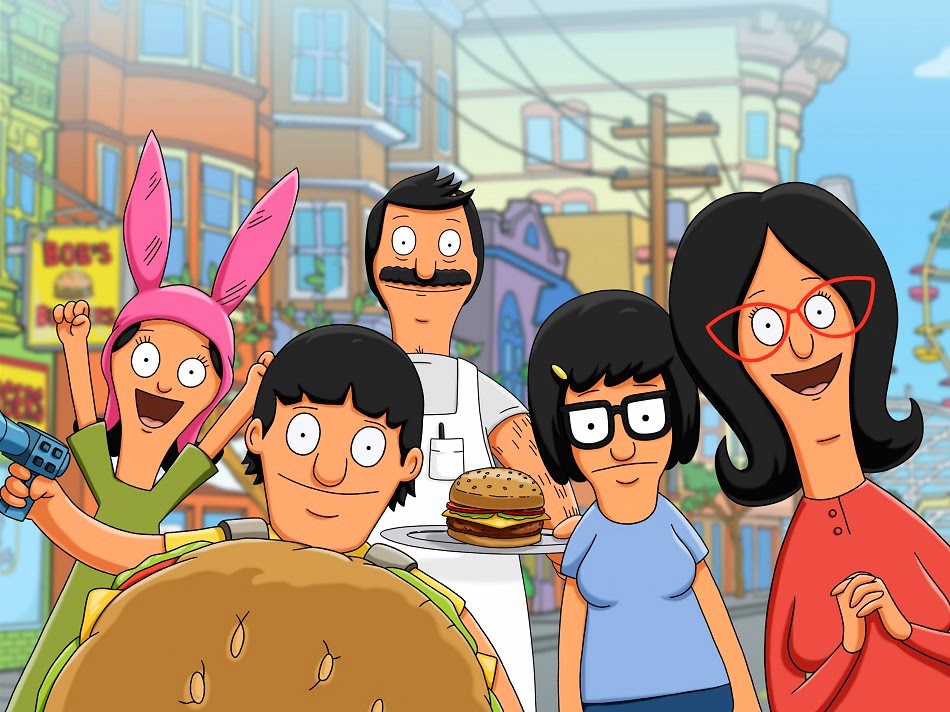
I wonder if Mrs. Belcher is an ancestor of Bob.

Fox Broadcasting

Here's the Story of an Aunt Named Pitty


Kitty Karry-All sayth there'th yankeeth in Atlanta.